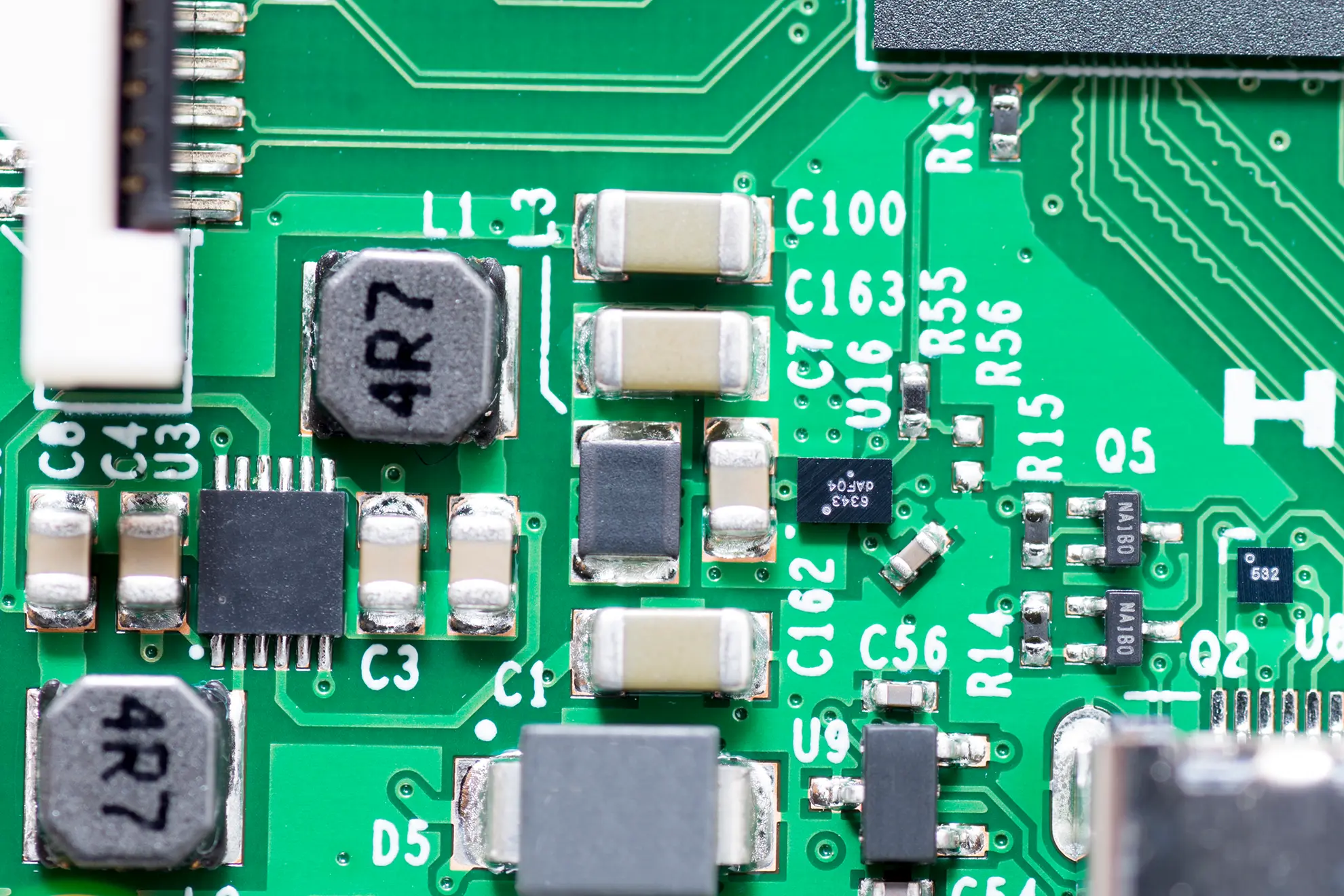
Precise SMD soldering depends on having the right tools. Small components, tight pad spacing, and delicate circuit boards place high demands on the manual soldering process. That’s why the soldering station, soldering iron, soldering tip, and rework tools must be precisely suited to the SMD application. Hakko offers a wide range of products for professional electronics manufacturing, from fine micro-soldering to demanding rework.
Why Tool Selection Is Crucial in SMD Soldering
In SMD soldering, heat must be applied to the solder joint in a precise and controlled manner. If heat transfer is insufficient, wetting problems or cold solder joints can occur. Conversely, excessively high temperatures can damage components, pads, or traces.
Therefore, the following are important:
- a temperature-stable SMD soldering station
- an ergonomic soldering iron for precise work
- the right soldering tip for each application
- reliable heat transfer, even for small components or multilayer printed circuit boards
Hakko offers specially designed soldering stations, soldering irons, and soldering tips that reliably support manual SMD soldering processes in electronics manufacturing.
SMD Soldering Stations from Hakko
For manual SMD soldering, Hakko offers the FX-97 family of flexible soldering stations designed to meet a variety of requirements. The series ranges from a compact 1-port station to a versatile 3-port solution, providing the right equipment for development, manufacturing, rework, and repair.
Depending on the application, different soldering irons and tips can be used. Hakko supports precise SMD soldering processes, stable temperature control, and a diverse selection of tools tailored to specific applications at the manual soldering workstation.
Suitable Soldering Irons for SMD Applications
Not every SMD soldering task requires the same soldering iron. Fine-pitch components, IC pins, ground planes, or shielded components place different demands on performance, ergonomics, and the soldering tip.
The Hakko FX-97 series offers a flexible system ranging from a compact 1-port workstation to a high-performance 3-port station. The FX-971, in combination with the FX-9703 micro soldering iron, is ideal for precise SMD work. For a variety of applications, rework, and component removal, the FX-972, as a 2-port station, offers greater flexibility—for example, with standard soldering irons, micro soldering irons, N2 soldering irons, or soldering tweezers.
For high-performance applications, high-thermal-mass solder joints, or a wider variety of components, the FX-973 expands the capabilities of the manual soldering workstation. With up to three connectable tools, fine SMD soldering, high-power solder joints, and rework tasks can all be handled within a single system environment. In this way, Hakko precisely tailors the tool selection to the specific application.
Choosing the Right SMD Soldering Tip
The soldering tip is the most important tool in SMD soldering. It determines how well heat is transferred and how precisely the solder joint can be worked on. However, the smallest soldering tip is not always the best choice. What’s more important is having a sufficient contact area with the solder joint.
Typical SMD soldering tips include:
- fine tips for small pads and point soldering
- chisel-shaped tips for good heat transfer
- beveled tips for IC connections and drag soldering
- curved tips for hard-to-reach areas
- wider tips for ground planes and larger pads
Hakko offers a wide range of soldering tip series for its various soldering irons. This allows the selection of tips to be precisely tailored to the component size, circuit board, and soldering task.
Hakko: Your Partner for Professional SMD Soldering
Professional SMD soldering requires tools that are precisely tailored to the specific application. A temperature-stable soldering station, the right soldering iron, the correct SMD soldering tip, and appropriate rework tools lay the foundation for reliable solder joints and stable processes.
Hakko offers a versatile product portfolio for this purpose, including soldering stations, soldering irons, micro soldering irons, N2 soldering irons, soldering tips, soldering tweezers, and desoldering and rework systems.
This enables the reliable implementation of manual SMD processes in development, manufacturing, service, and repair - from fine micro-soldering to thermally demanding rework tasks.